 Orders placed between June 24 and July 5 may experience slight processing delays due to inventory reconciliation and warehouse maintenance.


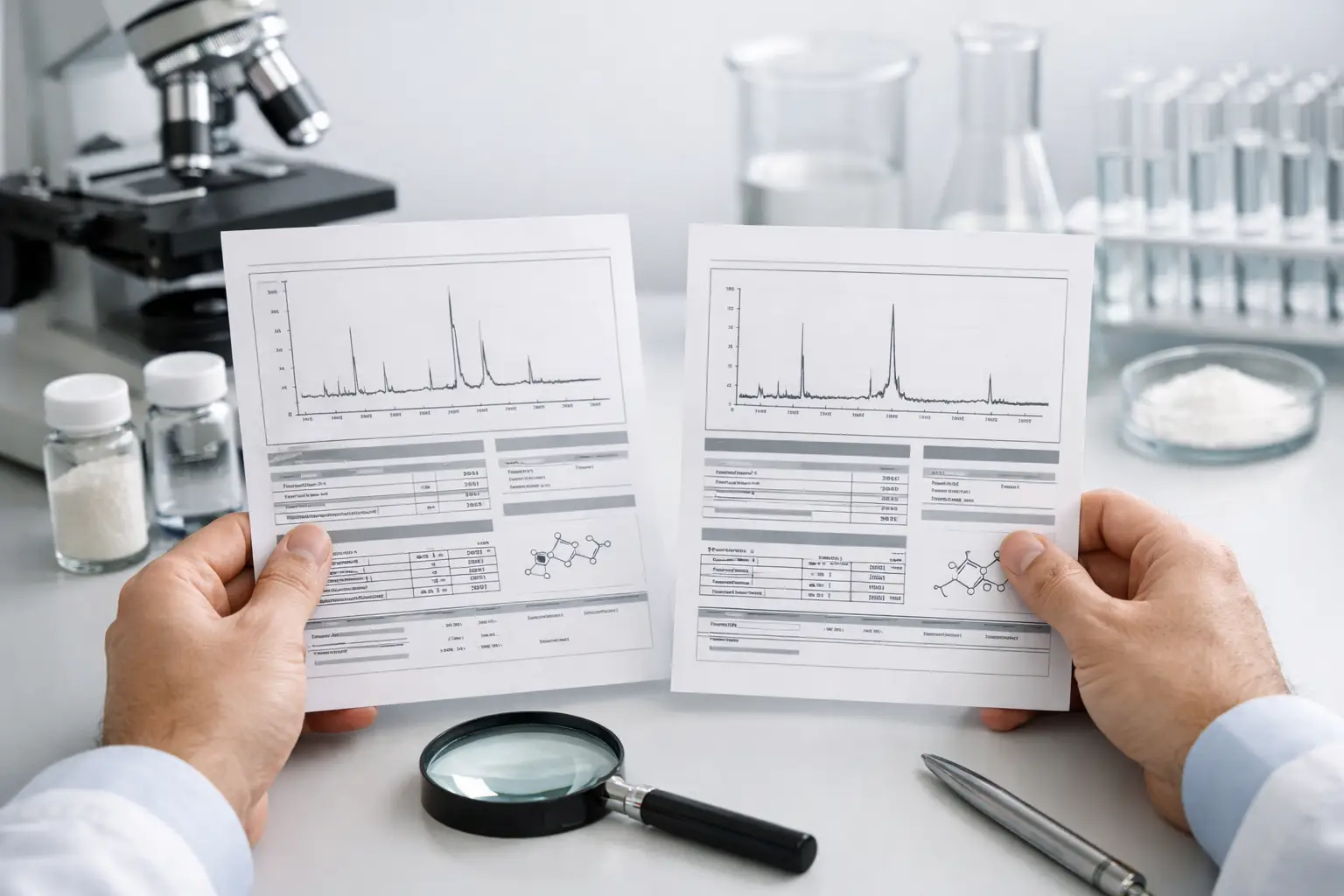
A purity claim is easy to print. A credible certificate of analysis is harder to fake, harder to interpret, and far more useful when you know what to inspect. If you are learning how to compare SARM purity certificates, do not stop at the headline number. A report showing 99% purity means very little unless it is tied to the exact batch, uses an appropriate analytical method, and comes from a source willing to stand behind its documentation.
For serious research buyers, the certificate of analysis, commonly called a COA, is not marketing decoration. It is a quality-control record. Read it with the same discipline you bring to choosing any performance-oriented research compound.
Start With the Batch Match
The first question is simple: does the certificate match the product being offered?
A legitimate COA should identify the compound, list a lot or batch number, include a test date, and name the laboratory or testing organization. The product label or product documentation should carry the same batch identifier. If the certificate says one thing and the vial, bottle, or listing provides no way to connect it to that document, the report cannot verify that specific product.
This is where many purity claims collapse. A supplier may post a polished report for a prior production run, a different concentration, or even a different compound format. That does not necessarily prove current inventory meets the same specification. A batch-specific COA is stronger because it creates a direct chain between the material tested and the material sold.
Dates matter, but they require context. A COA from several months ago is not automatically invalid when it reflects the current lot. On the other hand, an old, generic document with no visible batch reference should raise questions. Precision is the standard.
Compare More Than the Purity Percentage
The purity percentage attracts attention because it is fast to understand. It is also incomplete.
When comparing certificates, look at how the result is described. “Purity” may refer to chromatographic purity, assay value, area percent, or another calculated measurement. These are related but not interchangeable. A report that says 99.5% by HPLC may be useful, yet it should not be read as proof that every possible impurity has been characterized or that the measured concentration in a finished liquid is exact.
A strong COA identifies the sample and reports a defined result against a stated specification. For example, it may show an assay target of at least 98% and a result of 99.1%. That gives you two critical pieces of information: the quality threshold and whether the tested material passed it.
Be skeptical of perfect-looking numbers repeated across every batch. Real analytical work produces variation. Consistent high purity is a positive signal, but identical results down to multiple decimal places across unrelated lots can be a reason to ask for fuller documentation.
Identity Comes Before Purity
A sample can be highly pure and still be the wrong compound. That is why identity testing belongs at the center of any certificate review.
For SARM research materials, chromatographic methods such as HPLC or UPLC are commonly used to separate components and estimate purity. Mass spectrometry, often shown as LC-MS, can provide stronger evidence that the expected molecular mass is present. Nuclear magnetic resonance, or NMR, offers another high-value identity confirmation when available.
The best document set depends on the compound and format. HPLC alone may be acceptable for routine batch release when the supplier has validated methods and consistent controls. For higher confidence, especially when evaluating an unfamiliar supplier, look for evidence that supports both identity and purity rather than a single unlabeled percentage.
Read the Method, Not Just the Result
A certificate should tell you how the laboratory reached its conclusion. A result without a method is an assertion, not a complete analytical record.
Look for references to HPLC, UPLC, LC-MS, GC-MS, NMR, or other appropriate techniques. You do not need to be an analytical chemist to spot the difference between a real method reference and vague language. “Lab tested for purity” offers no meaningful detail. “HPLC purity: 99.2%, method identified, batch listed, test date included” is substantially more useful.
Chromatograms can add another level of transparency. In an HPLC chromatogram, a dominant primary peak is generally expected for a high-purity material. Extra peaks may represent impurities, degradation products, solvents, or method artifacts. The graph alone does not tell the entire story, but it demonstrates that actual chromatographic work was performed.
Do not overcorrect by demanding every possible test on every item. Extensive testing adds time and cost, and the right panel depends on whether the material is a raw powder or a finished solution. The point is fit-for-purpose verification, not paperwork for its own sake.
Know What the COA Does Not Prove
A COA is a powerful quality signal, but it has limits. It does not independently prove a supplier’s manufacturing practices, storage conditions after testing, legal status, or suitability for any particular use. It also does not turn a research compound into a product intended for human consumption.
For finished liquid research products, a raw-material COA is only part of the picture. The raw active ingredient may test at high purity before formulation, while the final product still requires controls for identity, concentration, solvent system, fill accuracy, and contamination risk. Ask whether the documentation applies to the raw material, the finished product, or both.
The same logic applies to statements such as GMP-certified or Made in the USA. These can be meaningful quality indicators when supported by clear operational standards and documentation. They should never replace batch-level analytical evidence. Professional sourcing is built on layers of verification, not one impressive phrase.
Check for Independent Testing and Real Traceability
Third-party testing can reduce conflicts of interest because the lab conducting the analysis is separate from the seller. That said, “third-party tested” should be supported by identifiable information, not simply placed next to a product image.
A more credible report typically includes the lab name, an analyst or authorized signatory, report or sample identification, dates, and clear results. Some laboratories provide a report number or other verification mechanism. Missing details do not prove fraud, but they reduce your ability to validate the document.
Traceability is the operating principle. Can you follow the record from product name to batch number, from batch number to test report, and from report to a named analytical source? The fewer gaps in that chain, the more confidence the document deserves.
Red Flags That Deserve a Closer Look
Use caution when a certificate has no batch number, no testing date, no stated method, or no laboratory identification. Low-resolution screenshots, heavily edited images, and documents that list only a logo and a purity claim offer limited value.
Other warning signs include a COA that names a different compound than the listing, a concentration that does not match the product, or language that confuses purity with dosage. A 99% raw-material purity result is not the same thing as confirming a finished solution contains its labeled amount per milliliter.
Price can also be part of the evaluation. Extremely low pricing paired with broad, unsupported purity claims may indicate that quality systems, analytical testing, or proper handling were not priorities. Premium research sourcing has real costs: controlled manufacturing, batch tracking, analytical work, packaging, and professional fulfillment.
Build a Repeatable Comparison Standard
The most efficient approach is to compare each supplier against the same standard. First, confirm the compound name and batch match. Next, verify that the report includes a date, lab identification, method, result, and specification. Then determine whether the COA addresses identity as well as purity, and whether it applies to raw material or the final product.
Finally, assess the supplier’s transparency beyond the document itself. A trusted supplier should communicate clearly, maintain consistent product records, and avoid using laboratory language as a substitute for evidence. ASN-LABS positions testing transparency and disciplined quality standards as central to that professional sourcing model.
A certificate should make you more confident because it answers specific questions, not because it looks technical. Choose documentation that is current, traceable, method-based, and relevant to the exact batch in front of you. That is how research buyers separate a bold purity claim from a quality standard worth relying on.